Healthy Boundaries for Peace: Scripts, Types & Confidence

Boundaries That Protect Your Peace: Strengthen Personal Limits and Build Emotional Confidence
Healthy boundaries make relationships clearer, reduce resentment, and support emotional steadiness under stress. They help separate what is yours to manage (needs, values, time, reactions) from what belongs to someone else (their feelings, choices, responsibilities). When boundaries are clear, it gets easier to show up with calm, consistency, and self-trust—especially during busy seasons, conflict, or change.
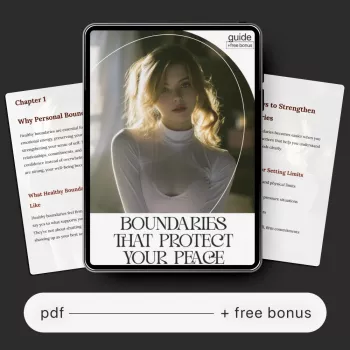
If boundary-setting feels awkward, that’s normal. Many people were taught to keep the peace by over-functioning, over-explaining, or absorbing other people’s discomfort. With practice, boundaries become less about “winning” a conversation and more about protecting your energy so you can be reliable to yourself and respectful to others. For guidance you can revisit anytime, Boundaries That Protect Your Peace | Guide on Ways to Strengthen Your Personal Boundaries and Build Emotional Confidence offers a practical, workbook-style approach you can use day to day.
What boundaries are (and what they are not)
Boundaries define what is acceptable and what is not—how time, energy, space, and communication are handled. They’re not punishments, threats, or attempts to control someone else’s behavior. A boundary is a choice paired with clear follow-through.
The simplest way to think about it: a boundary focuses on your actions. You’re deciding what you will do if a limit is crossed (end a call, leave an event, stop replying, reschedule, say no). That can be done warmly and respectfully while still being firm and consistent.
Signs a boundary needs strengthening
Boundaries usually need attention long before a big blowup happens. Common signals include recurring resentment, dread, or irritation around specific people or situations. You might notice over-explaining decisions, checking for permission, or feeling responsible for others’ emotions.
Other clues: frequent last-minute requests that disrupt sleep, work, or health routines; people-pleasing patterns (saying yes while privately hoping plans get canceled); or escalating conflict after long periods of silence or avoidance. These patterns are less about “being too sensitive” and more about missing clarity.
Core boundary types with real-life examples
Boundary types, phrases, and follow-through
| Boundary type | Clear statement | Follow-through (what happens if it’s ignored) |
|---|---|---|
| Time | “I’m not available tonight. I can talk tomorrow after 6.” | End the call or stop replying until the agreed time. |
| Emotional | “I care about you, but I can’t be the only support. Let’s find you more help.” | Pause the conversation if it becomes dumping or blame. |
| Communication | “I’ll continue this when we can speak respectfully.” | Leave the room, end the call, or reschedule. |
| Physical | “Please don’t hug me without asking.” | Step back and restate the request; limit contact if repeated. |
| Digital | “I don’t respond to work messages after 7 p.m.” | Turn off notifications; reply during work hours only. |
Why guilt shows up (and how to move through it)
Instead of trying to earn approval, aim for clarity. Brief statements reduce negotiation and emotional exhaustion. Self-validation helps: “It’s okay to disappoint someone to stay aligned with my health and values.” Expect some pushback when a boundary removes someone’s easy access to your time or emotional labor. For a research-grounded overview of healthy limits, the American Psychological Association’s boundary guidance is a helpful reference.
A simple method: name it, state it, support it
Repeat calmly. Consistency matters more than perfect wording, and repetition reduces escalation. If the boundary is crossed, take the pre-decided action without long lectures. If stress is making it harder to stay regulated in those moments, practical coping tools from Mayo Clinic’s stress management overview can support follow-through.
Scripts for common situations (work, family, friends, dating)
Building emotional confidence through boundaries
Boundaries also support financial peace. If lending, last-minute plans, or social pressure creates money stress, a simple plan reduces guilt and second-guessing. Consider pairing boundary work with The Beginner’s Guide to Taking Control of Your Money | How to Create a Budget for Beginners | Budgeting Basics Digital Download to strengthen your “no” with a clear budget framework.
When boundaries aren’t enough
When repeated violations continue, it’s reasonable to escalate protection: reduce contact, shift to written communication, or involve HR or a mediator. Watch for coercion, intimidation, or ongoing disrespect—safety and support come first. If you recognize patterns of control or fear, resources like the National Domestic Violence Hotline’s power and control information can help you name what’s happening and consider safer options.
A practical workbook-style next step
For a structured, reusable tool, Boundaries That Protect Your Peace | Guide on Ways to Strengthen Your Personal Boundaries and Build Emotional Confidence can serve as a weekly check-in: what felt draining, what felt respectful, and what needs adjusting.
If movement helps you reset after a hard conversation, a short walk can lower stress and help you return to your day grounded. Comfortable basics like Calvin Klein Jeans Women’s Sneakers or New Balance Women’s Grey Fall/Winter Sneakers can make those quick “decompression walks” more realistic, especially when you’re building new routines.
FAQ
How do boundaries differ from being selfish?
Boundaries protect health and clarity by defining what you can realistically give without resentment. They focus on your choices and limits, and they can be communicated respectfully; over time, reciprocity tends to improve because expectations become clearer.
What if someone gets angry when a boundary is set?
Anger is often a reaction to change, not proof you did something wrong. Stay calm, repeat the boundary without over-justifying, and follow through; if the response becomes threatening or unsafe, prioritize support and distance.
How can boundaries be set without starting a fight?
Use short statements, a neutral tone, and choose timing when emotions are lower. Offer one alternative if appropriate, and rely on consistency over persuasion—clear repetition usually reduces escalation.














Leave a comment