Indoor Charcoal Grill Heating Oven: Brass, Compact & Safe
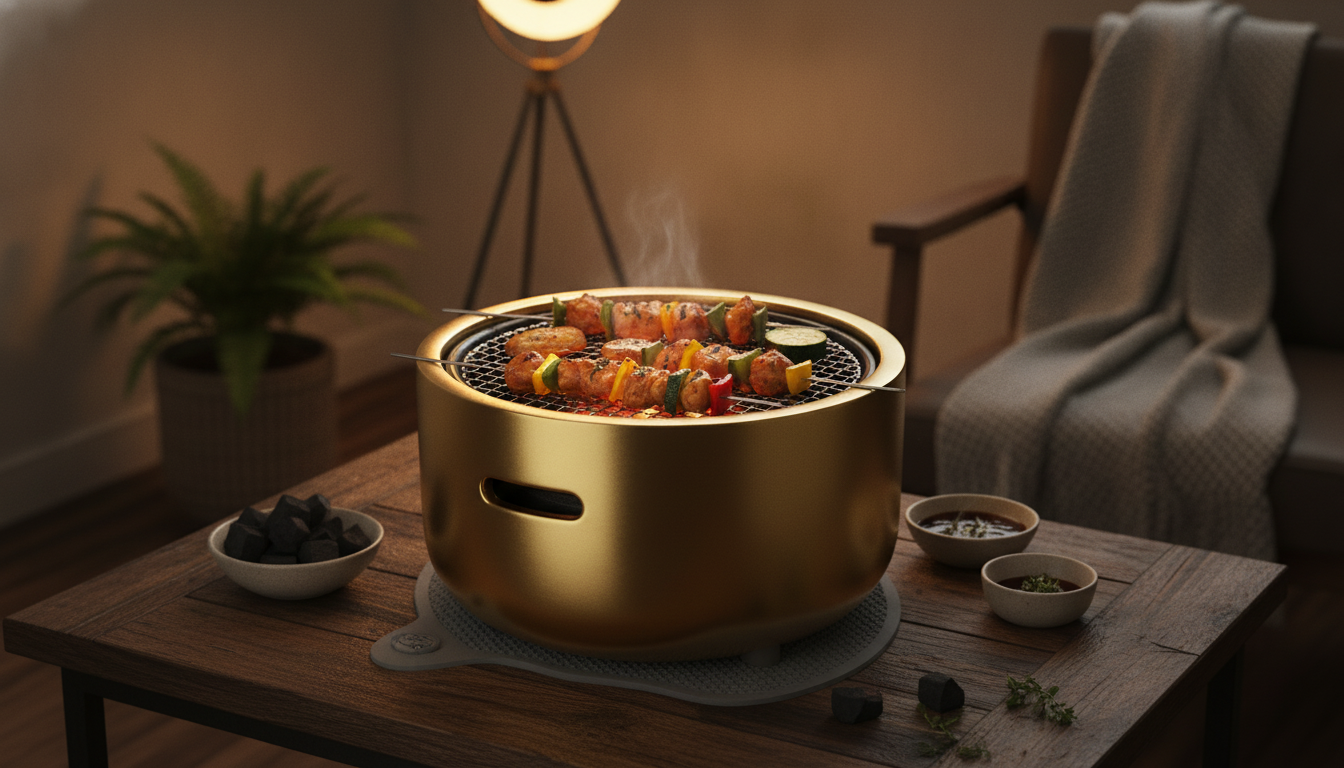
Indoor Charcoal Grill & Heating Oven: Compact Warmth with Classic Brass Character
A compact indoor charcoal grill and heating oven can deliver two hard-to-find comforts in smaller living spaces: the bold flavor of charcoal cooking and a steady, radiant warmth you can feel from across a table or near a chair. The tradeoff is responsibility—charcoal demands reliable ventilation, careful fuel handling, and active supervision every time it’s lit. Done right, this style of unit becomes a practical, space-friendly companion for cold nights, small gatherings, and hands-on cooking.
What This Indoor Charcoal Grill & Heating Oven Is Designed to Do
- Dual-purpose performance: tabletop grilling plus radiant heat from a compact heating body.
- Small-space friendly: suited to apartments, cabins, workshops, and compact entertaining zones where a full-sized stove or outdoor grill isn’t realistic.
- Classic brass look: a warm, old-world finish that pairs well with traditional, vintage, or eclectic decor.
- Safety-focused construction: emphasis on stable placement and predictable airflow paths, while still requiring ventilation and monitoring during use.
Key Features That Matter Most in Daily Use
Heat control: airflow and fuel load
With charcoal, temperature management is mostly about how much fuel you light and how freely air can flow. A smaller charcoal load is easier to stabilize indoors, while a heavy load can spike heat and smoke quickly. Clear vents and an unclogged ash area help the fire burn more cleanly and predictably.
Cooking surface practicality
Look for a grate that sits securely and doesn’t rock when you flip food. Stability matters indoors because you’ll often cook smaller portions and reposition items more frequently. A well-fitted grate also reduces accidental contact with hot edges when using tongs.
Heating performance expectations
Think of this unit as localized warmth: it’s ideal for taking the chill off a nearby seating area or warming hands near a workbench. It’s not intended to replace whole-home heating, especially in larger rooms or drafty layouts.
Materials and brass-finish considerations
A brass exterior adds a distinctive, decorative feel, but finishes can dull if scrubbed with harsh abrasives. Heat-resistant internal components and corrosion-aware care (keeping it dry, cleaning ash promptly) help preserve both appearance and performance.
Portability and placement
These units are easiest to move only after full cooldown. Plan a heat-safe “parking spot,” use a protective heat mat for sensitive surfaces, and maintain clear space from combustibles like curtains, paper, and upholstered furniture.
Specifications Snapshot
Before buying, compare the unit to your available space, ventilation plan, and how you expect to use it (quick grilling sessions vs. longer warming time). A few basic accessories also make day-to-day operation smoother.
| Item | What to Confirm | Why It Matters |
|---|---|---|
| Placement | Stable, heat-safe surface with clear space around the unit | Reduces tip risk and heat damage to nearby objects |
| Ventilation | A plan for fresh air exchange (window, vent fan) and monitoring | Charcoal use can produce carbon monoxide and fine particles |
| Fuel & ignition | Charcoal type, starter method, and safe lighting area | Improves consistency and reduces flare-ups or excessive smoke |
| Cleaning | Ash removal method and storage container for cooled ash | Prevents airflow blockage and reduces odor/smoke on next use |
| Safety tools | CO alarm nearby, heat-resistant gloves, long tongs | Adds a practical safety buffer during operation |
Setup and First Burn
- Unpack and inspect: check for dents, looseness, and proper grate alignment before lighting.
- Choose a safe location: a non-combustible surface away from curtains, aerosols, and foot traffic.
- Plan ventilation first: open a window or run an exhaust fan before ignition and keep airflow consistent.
- Do a short first burn: use a modest charcoal load to burn off residues and learn how airflow affects heat.
- Create a safety zone: maintain clearance, keep kids/pets back, and never move the unit while hot.
How to Use It for Grilling Indoors (Without Turning the Room Smoky)
Using It as a Compact Heating Oven
Safety Essentials for Indoor Charcoal Use
- Carbon monoxide awareness: use a working CO alarm and never operate in an unventilated room. The CDC’s guidance on prevention is worth reviewing: CDC — Carbon Monoxide Poisoning Prevention.
- Ventilation is non-negotiable: consistent fresh air exchange reduces CO and airborne particles; see U.S. EPA — Indoor Air Quality (IAQ).
- Fire safety basics: keep an extinguisher accessible and avoid storing extra charcoal near heat. For general grilling hazards, reference NFPA — Grilling Safety.
- Handle hot parts carefully: use heat-resistant gloves and long tools; assume metal is hot even if it looks dark.
- Ash and ember discipline: dispose only after fully cooled in a lidded metal container, stored away from combustibles.
- Never sleep while operating: indoor charcoal devices require active supervision from lighting through full extinction.
Cleaning, Maintenance, and Finish Care
Recommended In-Stock Picks
- Indoor Charcoal Grill & Heating Oven – Compact, Brass Finish, Safety Enhanced — a space-conscious option for tabletop grilling and localized radiant warmth with a classic brass-style exterior.
- Shop Smart, Save Big: The Ultimate Guide to Cutting Costs Without Cutting Corners (Digital Download) — helpful for planning household purchases like safety accessories, cleaning tools, and other essentials without overspending.
FAQ
Is it safe to use a charcoal grill indoors?
Indoor charcoal use carries serious carbon monoxide and fire risks, so it should only be done with consistent ventilation, a working CO alarm nearby, and active supervision from start to finish. Never operate in enclosed, unventilated spaces.
How can smoke be reduced when grilling indoors with charcoal?
Use smaller fuel loads, wait until coals are fully established before cooking, and choose leaner foods with less dripping fat. Keeping airflow steady and cleaning out ash/soot also helps reduce smoke.
How should ash be disposed of after indoor charcoal use?
Wait until ash and embers are completely cooled, then transfer them into a lidded metal container and store it away from anything combustible. Follow local disposal rules for ash in your area.













Leave a comment