Kids Bookshelf: 11 Cubbies + 2 Cabinets for Easy Cleanup
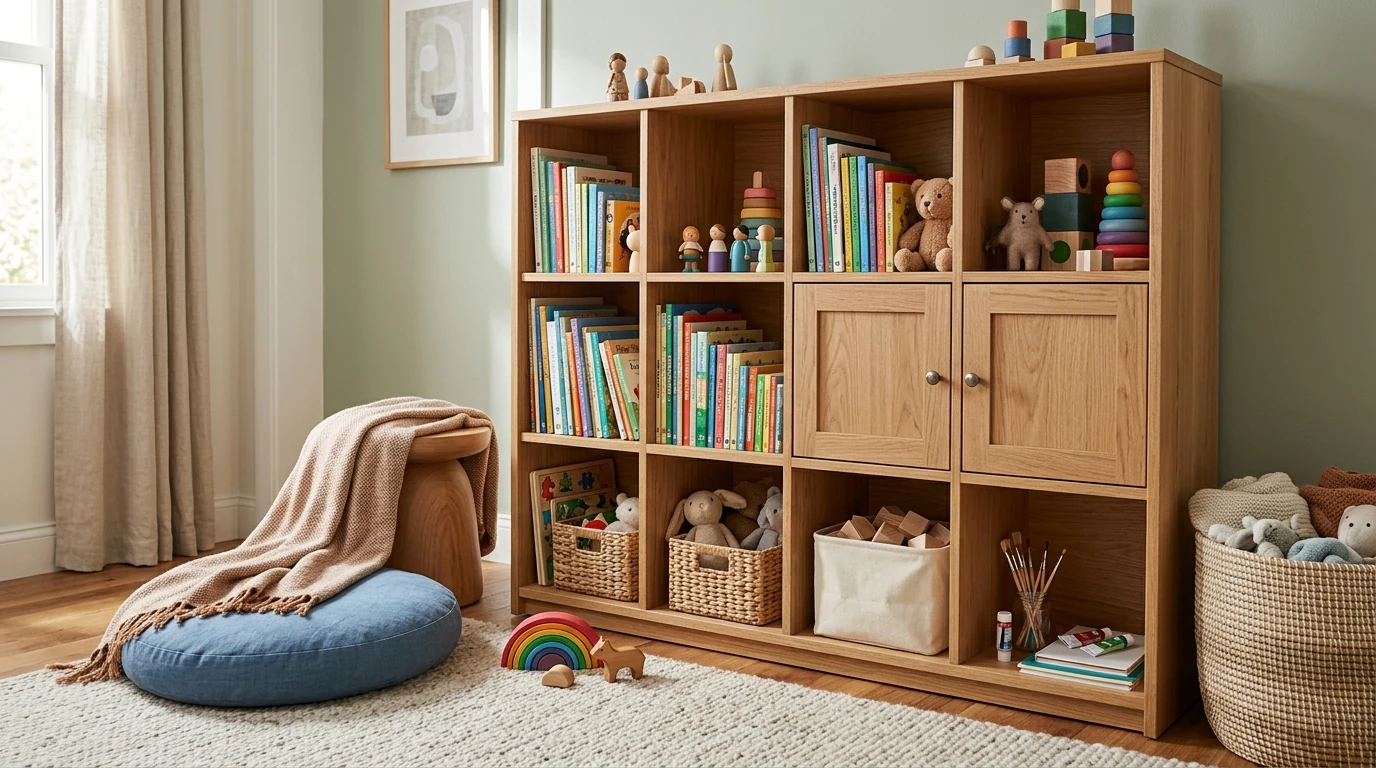
Kids Bookshelf with 11 Cubbies and 2 Cabinets: Open-and-Closed Storage That Actually Helps Kids Clean Up
A kid-friendly bookshelf that pairs open cubbies with closed cabinets makes it easier to keep books, toys, and art supplies organized while still looking tidy. This kind of mixed layout supports independent cleanup (open spaces for daily use) and quick visual calm (doors for the inevitable clutter). If you’re trying to reduce the “everything ends up on the floor” cycle, a unit with both cubbies and cabinets creates clear homes for every category—without turning the room into a wall of bins.
What makes a cubby-and-cabinet bookshelf work for kids
The best kids storage is easy to understand at a glance. When children can see where items belong, they’re more likely to put them away without a long set of instructions.
- Open cubbies keep favorite picture books and toys within easy reach for everyday play and reading.
- Cabinets hide overflow items, bulky toys, or supplies that should be accessed with help (paints, small pieces, batteries).
- Mixed storage can reduce “floor piles” by giving each category a predictable home—no guessing, no reshuffling.
- Clean, neutral style can grow with a child from toddler years through early school years just by changing what goes in each compartment.
Featured pick: 11 cubbies plus 2 cabinets
If you want a single piece that can handle books, toys, and crafts at the same time, an 11-cubby layout with two cabinets is a practical sweet spot: lots of open sorting space, plus doors for the categories that look messy fast.
For a ready-to-use option, see the Kids Bookshelf with 11 Cubbies and 2 Cabinets. It’s designed for balanced organization—open compartments for quick grab-and-go, and cabinet sections that help a room look instantly more put together.
- Balanced organization: multiple open compartments for sorting, paired with two cabinet sections for a cleaner look.
- Daily-use setup: keep a rotating selection of books in the lowest cubbies, and store puzzles, blocks, or craft kits in higher cubbies.
- Cabinet strategy: reserve cabinets for items that look busy or create mess quickly, such as mixed building sets, dress-up accessories, or art paper stacks.
- Room flexibility: works as a reading-nook anchor, a playroom organizer, or shared sibling storage when each cubby is assigned a category.
Example organizing map for 11 cubbies and 2 cabinets
| Zone | Best for | Kid-friendly tip |
|---|---|---|
| Lower cubbies | Board books, bedtime favorites, plush toys | Face books outward occasionally to help younger kids choose by cover |
| Middle cubbies | Bins for blocks, cars, dolls, magnetic tiles | Use labeled bins so cleanup is matching, not sorting |
| Upper cubbies | Seasonal toys, keepsakes, extra notebooks | Rotate items monthly to keep interest high without adding clutter |
| Cabinets | Art supplies, small parts, “miscellaneous” toys | Use a small tray/bin inside the cabinet to prevent a single mixed pile |
Placement ideas that keep the room feeling calm
Where the bookshelf lives matters almost as much as what goes inside it. A good placement reduces visual noise and makes cleanup feel automatic—because the storage is right where the activity happens.
- Reading corner: pair the shelf with a soft rug and a basket for blankets; keep 10–20 books visible to avoid overwhelming choices.
- Playroom zoning: place the unit near the play area and assign cubbies by activity (building, pretend play, vehicles, crafts).
- Bedroom storage: use cabinets for less-used toys and open cubbies for bedtime books and a small night light or sound machine (kept safely away from edges).
- Shared spaces: create “personal cubbies” per child to reduce conflicts and speed up cleanup.
Safety, stability, and kid-ready setup
Any storage furniture in a child’s space should be set up with stability in mind. Tip-over prevention is especially important in rooms where kids climb, pull, or use shelves for balance.
- Anchor it: use appropriate wall-anchoring hardware for your wall type (stud, drywall anchors, masonry) to reduce tip-over risk. The U.S. Consumer Product Safety Commission provides practical guidance on furniture tip-over prevention: CPSC Furniture Tip-Over Information.
- Weight distribution: place heavier items (large books, big bins) in lower cubbies to improve stability.
- Door and hinge awareness: teach children to open cabinet doors slowly and keep fingers clear; consider soft-close add-ons if desired and compatible.
- Material check: confirm finishes are suitable for children’s spaces; follow manufacturer guidance for age use, load limits, and assembly steps. For broader home-safety habits, see the American Academy of Pediatrics resource hub: AAP Home Safety.
- Post-assembly review: re-tighten fasteners after the first week of use and periodically thereafter, especially in high-activity rooms.
Organizing routines that actually stick
The difference between “organized for a day” and “organized for the month” is the routine. Simple systems win—especially ones that match how kids naturally tidy up.
Care and upkeep for everyday messes
More in-stock picks
FAQ
Do cabinets or open cubbies work better for kids?
Open cubbies support independence because kids can see and reach what they want. Cabinets help reduce visual clutter and work well for messy categories, so a combination gives you both daily accessibility and a tidier-looking room.
How should a kids bookshelf be anchored to the wall?
Follow the manufacturer’s anchoring instructions and use hardware that matches your wall type (stud, drywall anchors, or masonry). Keep heavy items in lower cubbies to improve stability and reduce tip-over risk.
What should go in the cabinets versus the cubbies?
Use cubbies for daily books and simple activity bins (blocks, cars, dolls) so kids can grab and return items easily. Put small parts, art supplies, and mixed categories in the cabinets to contain visual clutter—adding a tray or small bin inside prevents one big pile.










Leave a comment