XL Enclosed Stainless Steel Litter Box: High Walls + Lid
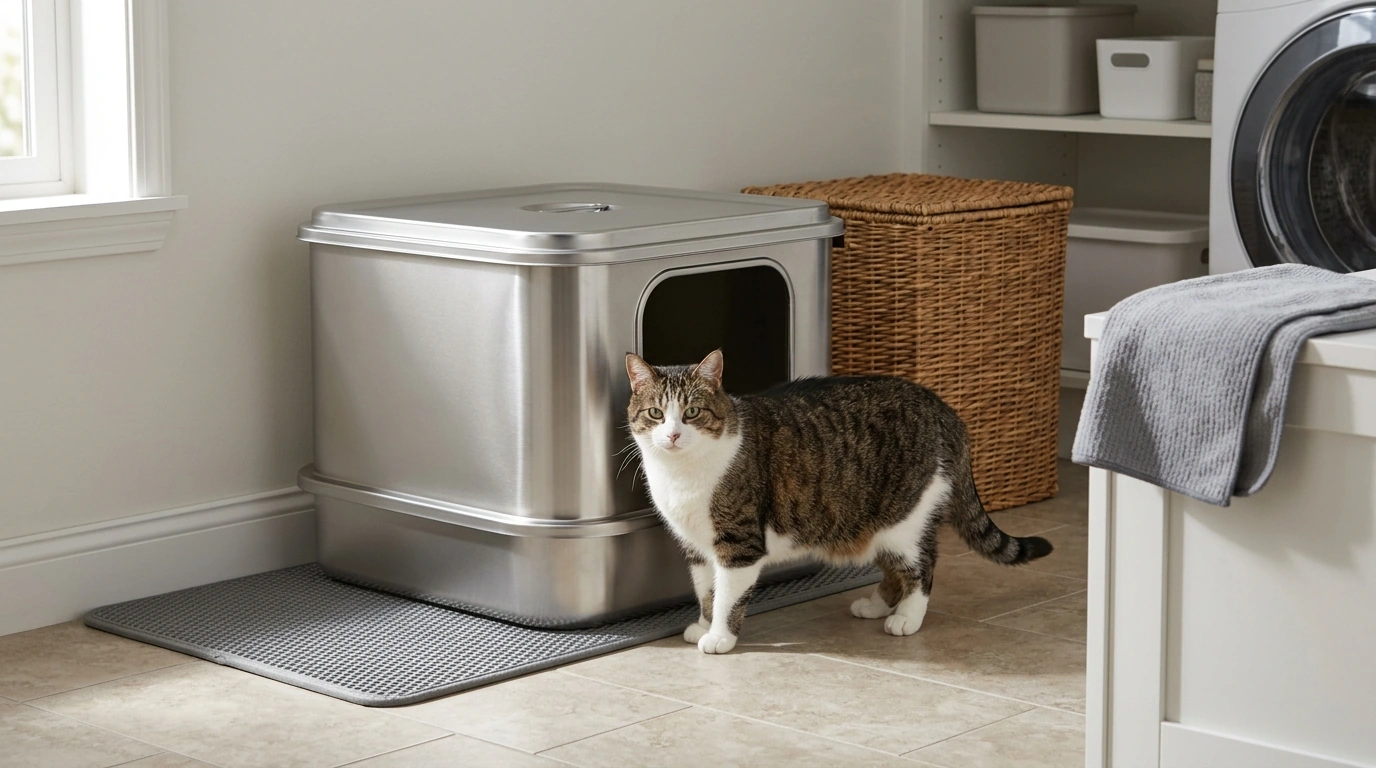
XL Enclosed Stainless Steel Cat Litter Box with High Walls & Lid for Big Cats
For cats that kick litter, miss the box edges, or track odors through the home, an enclosed stainless steel litter box with high walls and a lid can make daily upkeep noticeably easier. This guide covers what to expect from an XL enclosed stainless steel setup, how it supports cleaner floors and fresher rooms, and what to check before switching—especially for larger cats and multi-cat households.
What an enclosed stainless steel litter box changes
Switching from a basic plastic pan to an XL enclosed stainless steel box usually changes two things right away: how “stuck” odors become over time, and how much mess ends up outside the box.
- Less odor absorption: Stainless steel is non-porous, which helps limit odor absorption compared with many plastics that can develop micro-scratches and hold smells over time.
- Better containment: High walls help contain scatter from enthusiastic diggers and reduce urine spray escaping the box—especially helpful for cats that stand to pee.
- Cleaner-looking litter area: A lid adds a physical barrier against kicked litter and can reduce visible mess, as long as there’s still adequate airflow and easy access.
- Comfort matters for big cats: XL sizing is about more than “bigger is better”—large cats need space to turn around and squat naturally without pressing into corners.
- Placement still matters: Covered boxes can look tidier in living spaces, but should be placed where the cat feels safe and has an easy exit route.
Key features to look for in an XL high-wall enclosure
Not all enclosed boxes solve the same problems. The best setup for scatter won’t always be the best setup for a senior cat, and a box that looks roomy from the outside can feel tight on the inside.
- Interior footprint: Prioritize floor space so your cat can do a full turn and a natural squat. Cramped boxes can lead to avoidance or accidents nearby.
- Wall height and lid overlap: Higher side panels help most with spray and corner misses. Check how the lid overlaps the walls to reduce gaps where urine or litter can escape.
- Entry style: A low, comfortable step-in helps seniors or heavier cats. Top-entry styles can reduce tracking, but they’re not ideal for every cat.
- Lid security: The cover should attach firmly so it doesn’t shift when the cat pushes against it, yet remove easily for scooping and deep cleaning.
- Smooth edges and corners: Rounded corners reduce buildup and make wipe-down faster, especially around seams.
- Compatibility with mats: Many households pair an enclosed box with a tracking mat outside the entry to catch granules on exit.
Product snapshot: XL Enclosed Stainless Steel Cat Litter Box with High Walls & Lid
If the main goals are less lingering odor, fewer floor messes, and a roomier setup for a larger cat, the XL Enclosed Stainless Steel Cat Litter Box with High Walls & Lid for Big Cats is built for that exact use case.
- Designed as an extra-large, enclosed stainless steel option with high walls and a lid for bigger cats that need more room and better containment.
- Stainless steel construction supports thorough cleaning and helps reduce lingering odors that can build up in porous materials.
- The enclosed, high-wall format is geared toward minimizing scatter and keeping urine inside the box, improving floor cleanliness around the litter area.
- A solid fit for households that want a more durable box for daily scooping and periodic deep washing.
- Plan placement with clearance so the lid can be removed and the cat can enter/exit without feeling cornered.
Quick comparison: common litter box materials and designs
| Option | Odor absorption over time | Scatter/spray control | Cleaning effort | Best for |
|---|---|---|---|---|
| Stainless steel, high walls + lid | Low | High | Fast wipe-down; deep clean is simple | Big cats, spray issues, odor-sensitive homes |
| Plastic, high walls + lid | Medium to high (can increase with scratches) | High | Can retain odors; needs more frequent deep cleaning | Budget setups needing better containment |
| Plastic open pan (standard height) | Medium to high | Low to medium | Easy access but more surrounding cleanup | Cats that dislike covers; tight spaces |
| Top-entry box (various materials) | Varies by material | High for tracking; medium for spray depending on design | Can be awkward to scoop; lid access matters | Tracking control in small apartments |
Setup tips for a smooth transition
Even a “better” box can be rejected if the change feels too abrupt. A calm transition is especially important for cautious cats and multi-cat homes.
Cleaning and odor control with stainless steel
For broader guidance on cat care and litter box habits, see the American Veterinary Medical Association (AVMA) — Cats: General Care and the ASPCA — Litter Box Problems.
Choosing the right size and layout for big cats
Featured products
- XL Enclosed Stainless Steel Cat Litter Box with High Walls & Lid for Big Cats
- Adidas Men’s White Sneakers
- Birkenstock Women’s White Leather Slippers
FAQ
Do covered litter boxes trap odors inside?
A lid can reduce how much odor spreads through the room, but smells still build up if scooping is inconsistent. Good ventilation, daily scooping, and regular deep cleaning matter, and stainless steel helps because it absorbs less odor than many plastics.
Will a big cat actually use an enclosed litter box?
Many big cats do well with an enclosed box if the interior is truly roomy and the entry is comfortable. If your cat hesitates, start with the lid off for a few days and avoid placing the box in a tight corner where the exit feels blocked.
How often should a stainless steel litter box be deep-cleaned?
For most homes, deep cleaning every 2–4 weeks works well, adjusting for the number of cats and the litter type, while still scooping daily. Use mild soap and water, rinse thoroughly, dry completely, and check lid seams and corners where residue can hide.











Leave a comment