Daily Affirmation Checklist: 5-Min Gameplan That Sticks
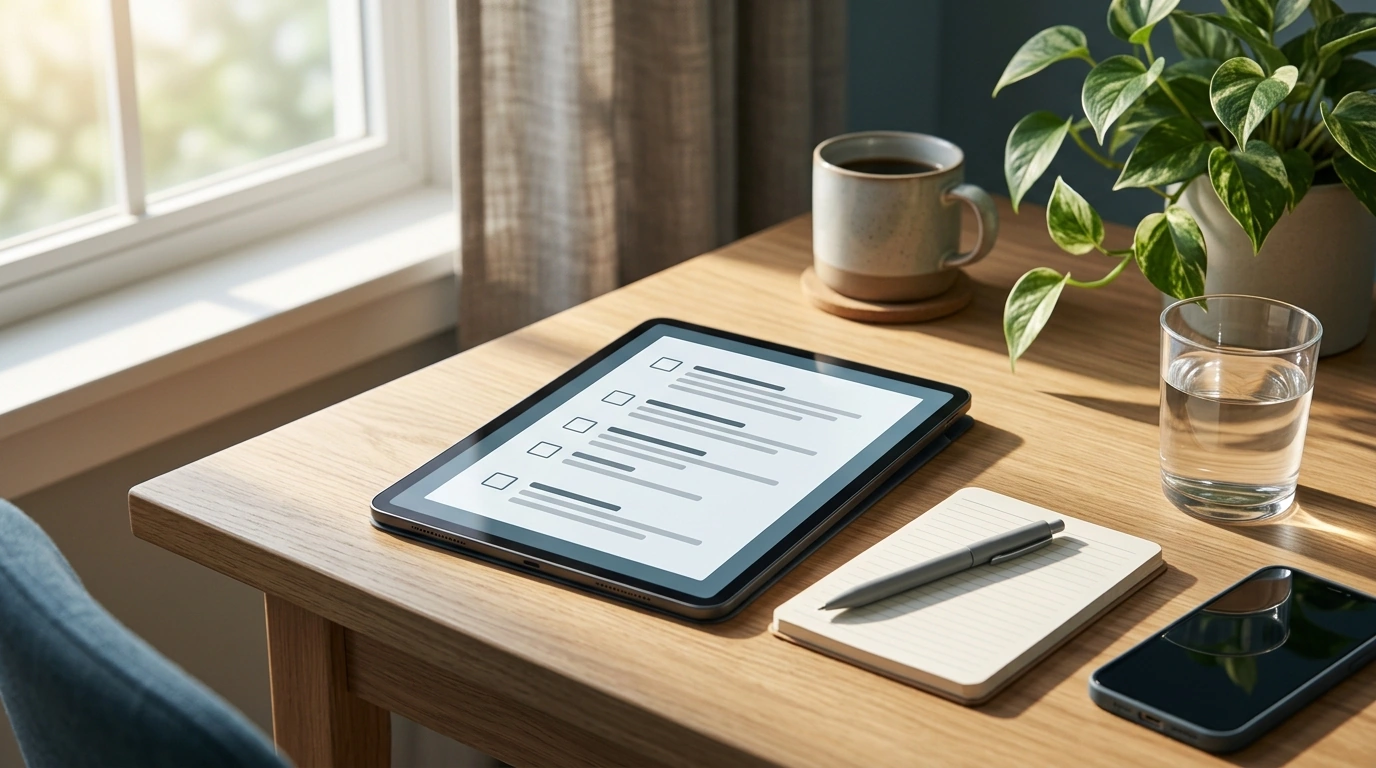
Your Daily Affirmation Gameplan: A Digital Checklist for Mindset Growth
Affirmations can feel powerful in the moment and still fade by lunchtime. A simple, repeatable routine makes them stick—especially when it’s easy to follow on busy days. This gameplan-style digital checklist turns affirmations into a practical habit: choose a focus, use statements that feel believable, pair them with small actions, and track consistency for steady mindset growth.
What This Digital Checklist Helps You Do
- Turn affirmations into a daily routine instead of an occasional boost
- Pick a clear focus area (confidence, health, work, relationships) and keep it consistent long enough to notice change
- Use affirmation formats that sound natural and believable, reducing “this feels fake” resistance
- Connect words to behavior with quick, doable action prompts
- Track progress with a lightweight check-off system that encourages consistency
At its core, the checklist is a small “do this next” structure—because mindset practices get easier when decisions are already made. The goal is less hype, more follow-through.
Why Some Affirmations Don’t Stick
- Statements that feel too far from current reality can trigger pushback rather than motivation
- Repeating words without emotion, context, or action can make the practice feel hollow
- Inconsistent timing (different times each day) reduces habit formation
- Too many affirmations at once creates noise; fewer, targeted statements create traction
- No tracking or reflection makes it hard to see patterns and improvements
Self-affirmation research focuses on protecting and strengthening a sense of self—especially under stress—when the message connects to values and real choices. For a quick overview, see Encyclopaedia Britannica’s summary of self-affirmation theory.
A Daily Gameplan That Makes Affirmations Work
- Set a single “theme of the day” (example: calm focus, self-respect, follow-through) to guide every statement
- Write or choose 1–3 affirmations that feel plausible today; adjust wording until it feels like a steady step, not a leap
- Say them out loud once, then silently repeat while visualizing one specific situation where they apply
- Add a micro-action that proves the affirmation (send the email, drink water, do 5 minutes of planning, take a short walk)
- Close the loop at day’s end: quick check-off + one sentence about what worked
Daily Affirmation Checklist Flow (5–10 Minutes)
| Step | Time | What to do | Example prompt |
|---|---|---|---|
| Choose today’s focus | 30 sec | Pick one theme to guide the day | “Today’s focus: calm confidence.” |
| Select 1–3 affirmations | 2 min | Keep them believable and specific | “I can handle one step at a time.” |
| Repeat + visualize | 2 min | Say aloud, then picture a real scenario | “See yourself staying steady in a meeting.” |
| Micro-action | 3–5 min | Do one small proof action | “Draft the first 3 bullets of the report.” |
| Evening check-in | 1–2 min | Check off + note one win | “I paused before reacting—progress.” |
The “micro-action” is the hinge point. It converts a statement into evidence. This lines up with what psychology often calls planning and follow-through: pairing a clear intention with a specific next step improves the odds you’ll do it. For a practical overview, see the APA’s discussion of implementation intentions and goal achievement: Implementation intentions and goal achievement.
How to Write Affirmations That Feel Real (Not Forced)
- Use present tense and personal language that sounds like something that could be said naturally
- Swap absolutes (“always/never”) for steady progress language (“more and more,” “each day,” “in this moment”)
- Anchor to values and behavior: focus on actions and choices, not just outcomes
- If doubt shows up, use a “bridge” statement that acknowledges the gap without quitting
- Keep the set short; repeating a few well-crafted statements beats skimming a long list
Small, consistent reps matter. Habit research suggests automaticity grows through repetition in a stable context over time, not through intensity on day one. (See Lally et al., 2009: How are habits formed: Modelling habit formation in the real world.)
Examples You Can Adapt by Goal
- Confidence: “I show up even when I feel nervous, and I learn quickly.”
- Stress: “I can slow my breathing and respond with clarity.”
- Consistency: “I keep promises to myself in small ways every day.”
- Health: “I choose foods and routines that support my energy.”
- Work/Study: “I focus on the next right step, not the whole staircase.”
- Bridge options: “I’m practicing believing this.” / “I’m willing to try a new response today.”
If a line makes you internally argue, soften it. The best wording is the one you can repeat without flinching—then back up with one small action.
Make It Automatic: Timing, Triggers, and Tracking
Who This Is For (and When to Use It)
Get the Digital Checklist
If you want a ready-made routine you can reuse daily, Your Daily Affirmation Gameplan digital checklist walks you through a simple flow: choose a focus, repeat affirmations with intention, take a proof action, and check in at night. The digital format makes it easy to adjust wording, keep your streak visible, and stay consistent even on packed days.
- Adidas Men’s White Sneakers for an easy “lace up and reset” walking cue
- Birkenstock Women’s White Leather Slippers for a consistent at-home routine anchor
FAQ
How many affirmations should be used each day?
Use 1–3 focused statements. A small set is easier to repeat with attention, and it reduces mental pushback that can happen when you try to cover everything at once.
What if affirmations feel untrue or awkward?
Rewrite them to feel believable today and use bridge statements like “I’m practicing believing this.” Pair the words with one micro-action so you build real evidence that supports the statement.
When is the best time to do a daily affirmation routine?
Morning works well for setting your theme, followed by a brief evening check-in to close the loop. The most important factor is using the same cue every day (after coffee, after brushing teeth, before email) so the routine becomes automatic.
















Leave a comment