Rapid Trigger Hall Effect RGB Keyboard: Cleaner Movement
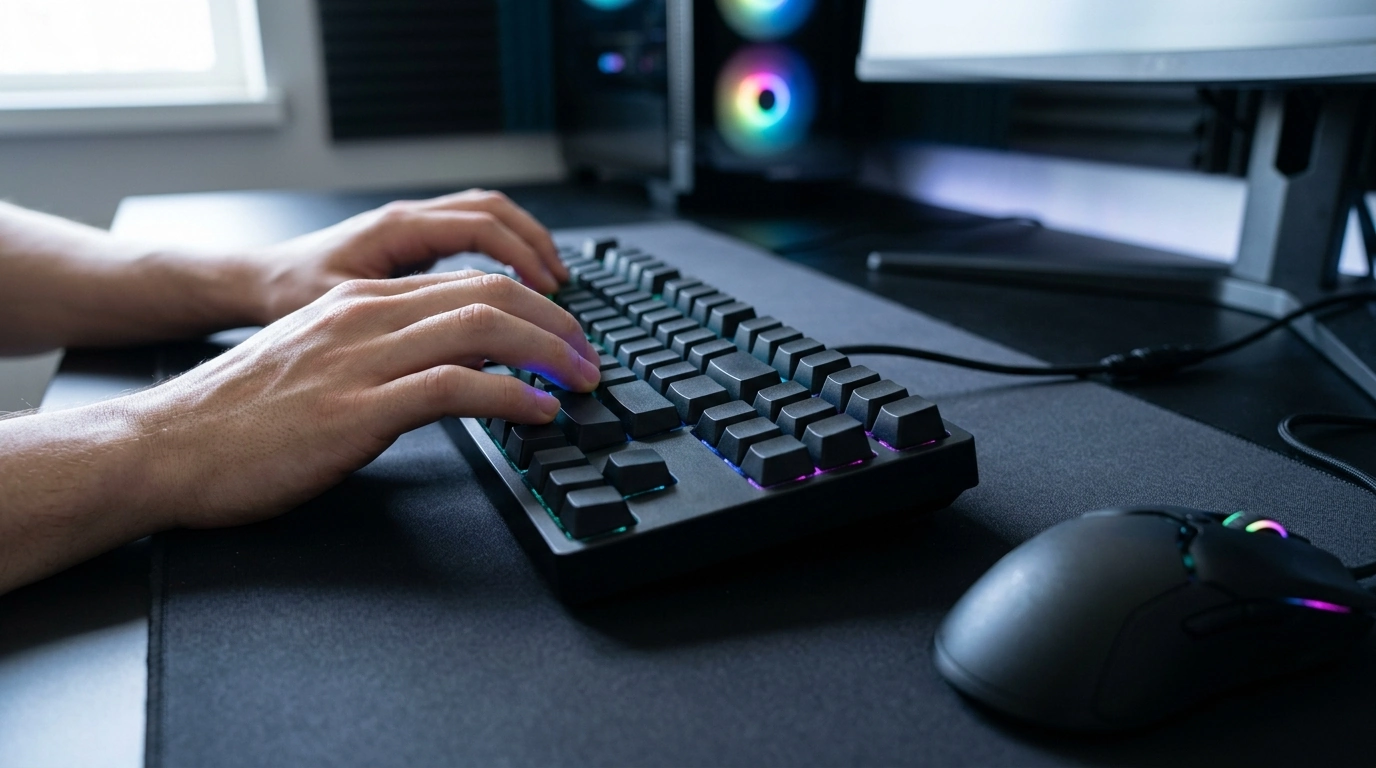
Rapid Trigger RGB Mechanical Gaming Keyboard with Hall Effect Switches: Faster Inputs, Cleaner Movement
Designed for fast, precise inputs, Hall effect switch keyboards use magnetic sensing to detect key travel with high consistency. Rapid trigger behavior can reduce the delay between releasing and re-pressing a key, which is especially helpful for quick strafes, counter-strafes, and rapid movement changes in competitive games. The result is a board that can feel more “connected” to your fingers—less waiting for a mechanical reset point, more immediate response as the key moves. For more guidance, see Rapid Trigger technology, Hall effect magnetic switches.
What Rapid Trigger and Hall Effect Switching Change
Traditional mechanical switches typically actuate and reset at fixed points. That’s predictable, but it can also introduce a small “dead zone” where a key hasn’t reset enough to register the next press. Rapid trigger behavior addresses that by allowing actuation and reset to respond dynamically as the key moves, rather than relying on a fixed mechanical reset point. For further reading, see Best rapid trigger keyboards 2026: CS2, Valorant, Apex ….
Hall effect switches measure key position using magnets and sensors. Because there’s no need for an electrical contact to close at a single spot, the keyboard can interpret position more granularly than many contact-based designs. This sensing approach is based on the Hall effect—how a magnetic field can be detected via electrical behavior in a conductor—commonly used in modern sensors (see Encyclopaedia Britannica — Hall effect and Analog Devices — Hall Effect Sensor Overview).
For day-to-day play, consistent sensing can also help reduce input variability over time compared to switches that depend on physical contacts. Many players notice the benefit most in:
- Fast movement control in shooters (strafes, counter-strafes, jiggle peeks)
- Rapid repeats in rhythm games
- Games that reward adjustable actuation for fine control (movement keys vs. abilities)
Performance Features to Look For in Competitive Play
Not every Hall effect keyboard is tuned the same way. The switch technology is only one part of the experience; firmware options and stability matter just as much for consistency.
Adjustable actuation range
The ability to set when a key activates can help tailor responsiveness for different games and playstyles. A very shallow actuation can feel instant for movement, while slightly deeper actuation can help avoid accidental presses on ability keys or inventory binds.
Per-key customization
Per-key tuning is especially valuable because movement keys often benefit from different behavior than utility keys. Mapping more aggressive rapid trigger behavior to WASD while keeping a safer actuation depth for Shift/Ctrl can make the board feel both fast and controlled.
Stable latency path
Polling rate, scan consistency, and firmware behavior matter as much as the switch type. A board that feels great in practice should also feel predictable in long sessions—no odd timing changes, no inconsistent key behavior, and no settings that “drift.”
Onboard profiles
Saving settings to the keyboard helps keep the same feel across PCs and tournament setups. It also reduces dependence on background software when you want a clean, lightweight gaming environment.
RGB Lighting and Everyday Usability
Per-key RGB can be more than decoration when it’s done well. It improves visibility in low light and supports custom layouts for game-specific key groups—like highlighting movement keys, ability clusters, or macro layers.
- Look for brightness controls and effects that don’t pull attention away during competitive sessions.
- Standard key sizes (where possible) keep replacement keycap options open if you like to customize feel or sound.
- Software should make it easy to save lighting alongside input profiles without requiring constant background services.
For many players, the best RGB setup is the one you set once and forget—clean, readable, and consistent with your profile switching.
Comfort, Build, and Sound Considerations
Quick Feature Checklist
| Category | What to check | Why it matters |
|---|---|---|
| Input control | Rapid trigger behavior and adjustable actuation | Improves responsiveness and helps tailor movement/ability keys |
| Consistency | Hall effect sensing (magnetic) with stable calibration | More consistent key position detection over time |
| Customization | Per-key settings and onboard profiles | Keeps the same feel across games and PCs |
| Lighting | Per-key RGB with easy controls | Visibility and layout highlighting without distraction |
| Build | Rigid case and stable larger keys | Better feel during rapid presses and fewer unwanted rattles |
Product Snapshot: Price, Availability, and What It’s Suited For
Rapid Trigger RGB Mechanical Gaming Keyboard with Hall Effect Switches is currently listed at $115.47 and in stock. It’s a strong fit for players who value fast movement control and want adjustable actuation behavior alongside RGB customization.
Check current price and availability to verify stock and any active updates.
More In-Stock Picks on Epherian
- Adidas Men’s White Sneakers — a simple everyday option if you want a clean look away from the desk.
- Birkenstock Women’s White Leather Slippers — a comfort-focused pick for long days at home.
FAQ
Do Hall effect switches feel different from standard mechanical switches?
The sensing method is different, but the feel mostly comes from the switch’s spring, housing, and tuning. Depending on the model, Hall effect switches can feel linear or more structured, and they often feel smooth and consistent because actuation is based on position sensing rather than a contact point.
What does rapid trigger help with in games?
Rapid trigger can help movement keys re-engage faster, making counter-strafes and quick direction changes feel cleaner and more responsive. It won’t replace good technique, but it can reduce the “waiting” feeling between releases and re-presses.
Is RGB purely cosmetic on a gaming keyboard?
It can be practical for highlighting important keys, setting per-game layouts, and improving visibility in dim rooms. Performance gains come from input tuning and build quality, but RGB can improve usability and consistency when profiles are well organized.













Leave a comment