1T/2T Hand Chain Hoist: 360° Rotating Hook Lift Guide
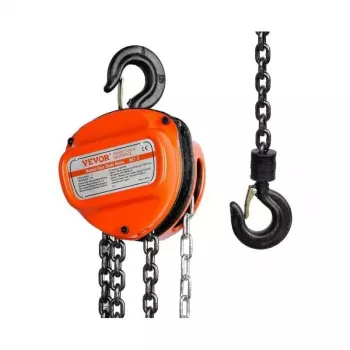
1T/2T Hand Chain Hoist with 360° Rotation Hook for Garage and Factory Lifting
A hand chain hoist is a practical way to lift engines, machinery, and heavy parts when electrical power is not available or when controlled, inch-by-inch movement matters. This 1T/2T model pairs a manual chain mechanism with a 360° rotation hook to help align loads in tight bays, garages, and shop floors while keeping operation straightforward and portable.
Where a hand chain hoist fits best
Manual chain hoists earn their keep anywhere a load needs to move slowly and predictably. Instead of relying on powered equipment that may be unavailable (or too abrupt for precise placement), a hand chain hoist lets you “feel” the lift and make small adjustments as you approach final position.
- Vehicle and small-equipment work: positioning engines, transmissions, or frames for maintenance and assembly
- Factory and warehouse tasks: lifting components onto benches, fixtures, or pallets where forklifts are impractical
- Construction and field service: portable lifting for repairs, installs, and rigging adjustments
- Home workshop use: occasional heavy lifts with precise control and minimal setup
- Best paired with an overhead anchor point such as a beam trolley, gantry crane, or rated lifting beam
For most shops, the biggest “unlock” is simply having a rated overhead point so the hoist can hang plumb over the load’s center of gravity. That single detail makes controlled lifting safer and reduces side loading on hooks and rigging.
Key features that matter during real lifts
Spec sheets are useful, but day-to-day lifting comes down to a few design choices that improve alignment, reduce frustration, and support repeatable handling.
- 360° rotation hook: helps orient the load without twisting the chain, especially useful when aligning holes, mounts, or parts to a fixture
- Manual hand chain control: supports smooth, incremental lifting for careful placement and a safer approach to final height
- Two capacity options (1T or 2T): choose based on the heaviest item to be lifted, including the weight of rigging hardware
- Compact and portable: easy to move between workstations or bring along for field repairs
- Hook safety latches: helps reduce the chance of a sling or chain slipping out when the load line changes angle
That rotating hook is especially helpful in tight bays where you can’t always reposition the entire hoist or load. Even so, the best practice remains the same: keep the load line vertical and avoid pulling at an angle.
Capacity planning for 1-ton vs 2-ton jobs
Choosing between a 1-ton and 2-ton hand chain hoist is more than matching a single “weight” number. Good capacity planning includes the entire lift system and the realities of real parts that may stick, shift, or break free unexpectedly.
- Start with the heaviest load expected, then add the weight of slings, shackles, spreader bars, and any lifting attachments.
- Avoid near-limit routine lifting. Leaving headroom reduces wear and often feels smoother on the hand chain.
- Consider load dynamics. A stuck part breaking free or a swinging load can momentarily increase forces.
- Check the support structure. The beam, trolley, anchor, or gantry must be rated above the total lifting demand.
- If you’re torn between capacities, selecting the higher rating only makes sense when the entire support and rigging system is also rated accordingly.
Also remember that “stronger hoist” doesn’t fix an under-rated beam or worn trolley. The anchor point is part of the lifting machine in practical terms—treat it that way.
Specifications snapshot
Use the checklist below before ordering or setting up a lift point. It helps prevent common problems such as insufficient headroom, mismatched rigging, or an anchor point that limits the true safe capacity.
| Item to confirm | Why it matters | What to check |
|---|---|---|
| Rated capacity (1T or 2T) | Prevents overloading and improves control | Hoist nameplate rating and expected maximum load including rigging |
| Hook rotation and latch condition | Helps alignment and keeps the attachment seated | 360° movement is smooth; safety latch closes fully |
| Lift height and headroom | Determines whether the load can clear obstacles | Ceiling/beam height; lowest hook position needed; hoist body clearance |
| Support structure rating | The hoist is only as safe as the anchor | Beam/trolley/gantry capacity and condition; fasteners and welds inspected |
| Rigging compatibility | Reduces side loading and sling damage | Sling/shackle size fits hook throat; no sharp bends; proper angles |
For industry guidance on hoist operation and inspection practices, reference standards such as ASME B30.16 (Overhead Hoists) and relevant workplace requirements like OSHA 1910.179 (Overhead and Gantry Cranes).
Safe setup and operating habits
A hand chain hoist is simple to use, but lifting is never “casual.” Consistent habits reduce the chance of shock loading, chain binding, and unstable picks.
Maintenance and storage for longer service life
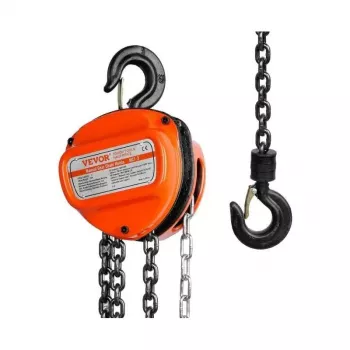
Product option for garage and factory lifting
FAQ
What does a 360° rotation hook help with?
It makes it easier to align and orient the load and rigging without twisting the chain, which is especially helpful in tight spaces and during precise positioning. The load should still be kept vertical to avoid side loading.
Should a 1-ton hoist be used to lift something that weighs close to 1 ton?
It’s better to leave a safety margin by accounting for rigging weight and potential dynamic forces during the lift. If more capacity is needed, move up only when the support structure and all rigging components are rated appropriately.
Can a hand chain hoist be used outdoors?
Yes, as long as the anchor point is stable and rated, and the hoist is protected from corrosion and contamination. After exposure to moisture or dust, inspect it, clean/lubricate as appropriate, and store it dry.















Leave a comment