5-Minute Gratitude Routine: Tiny Thanks Checklist
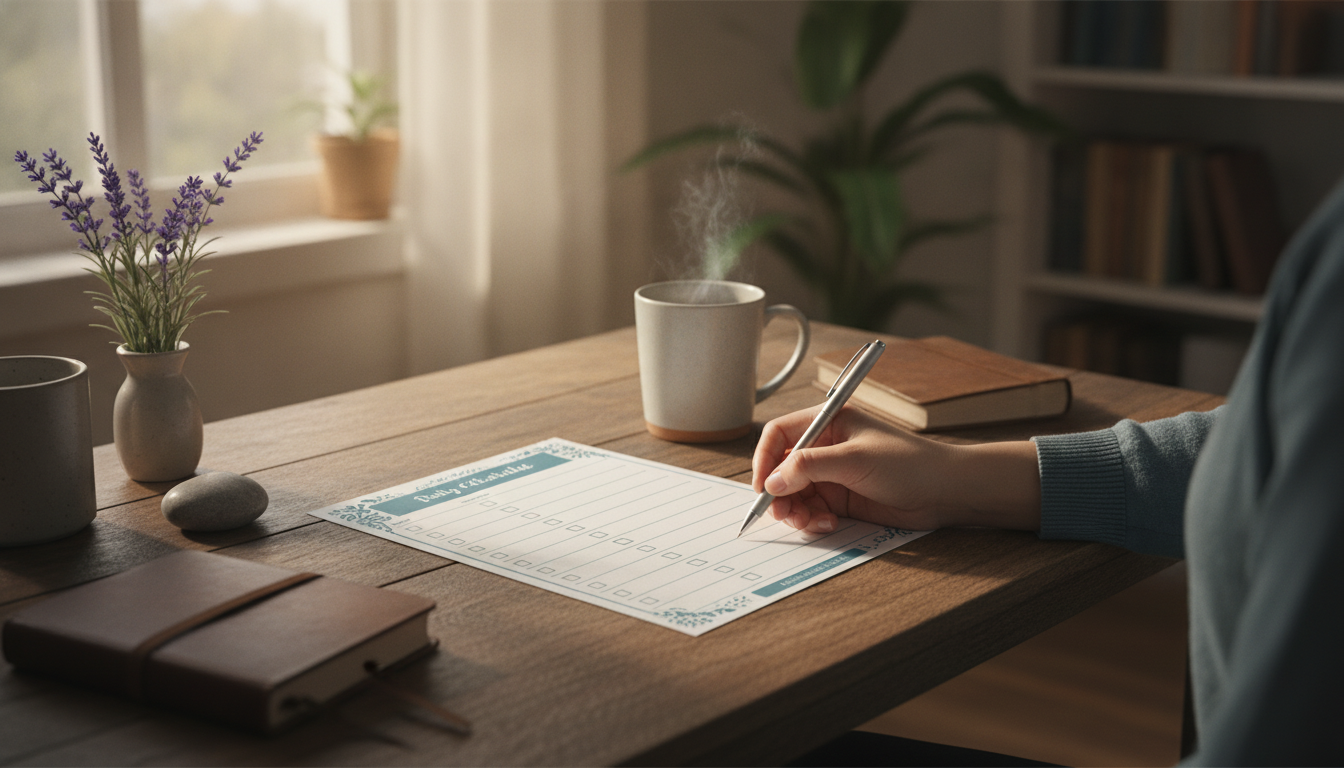
Gratitude works best when it’s small, specific, and repeated. A short routine—done consistently—can support mindfulness, boost positivity, and make stressful days feel more manageable. The goal isn’t to manufacture a perfect mood; it’s to notice what’s real and steady, even on messy days. Below is a practical, low-pressure daily checklist you can save or print, plus simple ways to tailor it for mornings, midday resets, and evenings.
What a “tiny thanks” practice looks like
A “tiny thanks” practice is intentionally small. Instead of reaching for a big, vague statement (“I’m grateful for everything”), pick something concrete: a specific moment, person, object, or comfort you can point to.
- Keep it specific: “My friend texted to check on me,” “the bus was on time,” “the soup tasted great.”
- Use the senses: name something seen, heard, tasted, touched, or smelled (sunlight on the wall, a familiar song, peppermint tea).
- Stack it onto an existing habit: coffee, commute, brushing teeth, plugging in your phone—something you already do daily.
- Choose consistency over depth: a 60-second check-in beats an occasional long session.
- Stay honest: on hard days, pick what’s true right now (a warm shower, a completed task, a safe place to sit).
If you want background on why gratitude and mindfulness practices can matter, these overviews are a helpful starting point: Greater Good Science Center — Gratitude, American Psychological Association — Gratitude, and NCCIH — Meditation and Mindfulness.
The daily routine: morning, midday, evening (5 minutes total)
This routine is designed to be quick enough for real life and structured enough to do even when your mind feels busy.
- Morning (1–2 minutes): write one thing that supports the day ahead (a skill, resource, or opportunity).
- Midday reset (1 minute): pause and name one thing that went better than expected.
- Evening (2 minutes): list three small wins or comforts; add one person to appreciate.
- Close with one sentence of intention: “Tomorrow, I’ll look for…”
- If time is tight: do the one-line version: “Today I’m grateful for ___ because ___.”
| Time | Prompt | Example | Time needed |
|---|---|---|---|
| Morning | One supportive thing for today | “My body carried me through yesterday; I can try again today.” | 1–2 min |
| Midday | One good surprise or small help | “A coworker answered quickly and saved me time.” | 1 min |
| Evening | Three tiny thanks + one person | “Sunlight on the walk; a tasty lunch; finishing one task; thankful for Sam’s check-in.” | 2 min |
| Anytime | One-line version | “I’m grateful for clean water because it makes everything easier.” | 30–60 sec |
Printable checklist vs. a blank journal: choosing the easiest format
The “best” format is the one you’ll actually use when your day gets loud.
- Checklist: reduces decision fatigue with prompts—especially useful when you’re anxious, tired, or short on time.
- Blank journal: works well if you like free-writing and already protect a consistent slot in your day.
- Digital: portable and easy to repeat (recurring note, tablet PDF annotation).
- Print: visible and easy to habit-stack in one physical spot (nightstand, desk, fridge).
- Start structured, then loosen: use prompts for two weeks, then add one optional “free note” line.
If perfectionism pops up, try a “good enough” rule: complete only one prompt and stop. The win is noticing—not filling every line.
Mindfulness + positivity: making gratitude feel real (not forced)
Gratitude lands best when it’s grounded, not performative. A simple way to make it feel real is to attach a reason.
- Add “because”: “I’m grateful for ___ because it ___.” This anchors the feeling in a clear, true detail.
- Balance honesty with a steady point: “Today was hard, and I’m grateful for one stable thing: ___.”
- Use micro-appreciations: comfort, safety, progress, kindness, learning, relief, laughter.
- Try a 10-second breath: inhale while naming the item; exhale while noticing the body response (shoulders drop, jaw unclenches).
- Avoid comparison gratitude: skip “others have it worse.” Choose “this helped me today.”
Prompts for different moods and seasons
On some days, open-ended prompts feel easy. On other days, a targeted question is the difference between doing the habit and skipping it.
Common obstacles (and quick fixes that keep the habit going)
Digital download routine: simple ways to use it day after day
For a ready-to-use format with prompts built in, see Tiny Thanks, Big Impact: Your Daily Gratitude Routine (Printable Checklist). If you enjoy pairing gratitude with practical planning habits, The Beginner’s Guide to Taking Control of Your Money (Budgeting Basics Digital Download) can fit nicely into the same “small daily steps” mindset.
A ready-to-use printable: Tiny Thanks, Big Impact
FAQ
How long should a daily gratitude routine take?
Anywhere from 1–5 minutes is enough if it’s consistent. If your day is packed, use the 30–60 second one-line version and attach it to a daily cue like your first sip of coffee or plugging in your phone at night.
What if gratitude feels fake or forced?
Choose specific, sensory, neutral items and add a “because” clause to keep it grounded: “I’m grateful for ___ because it ___.” It also helps to stay honest—“Today was hard, and I’m grateful for one steady thing”—and avoid “others have it worse” comparisons.
Is it better to write gratitude in the morning or at night?
Morning gratitude can set intention and highlight resources you can lean on; evening gratitude helps you reflect on small wins and comforts. If you want the simplest approach, pick the time you can repeat most easily—or split it into a short morning note and a short evening list.
















Leave a comment