Grow at Your Own Pace: Self-Aware, Confident Progress
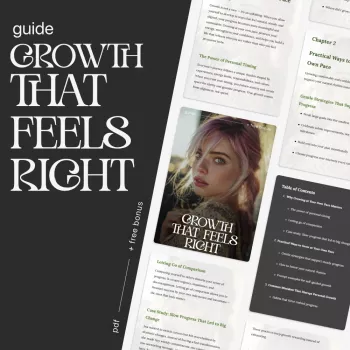
Growth That Feels Right: A Gentle Guide to Growing at Your Own Pace with Self-Awareness and Confidence
Sustainable growth rarely comes from forcing a timeline. It comes from noticing what matters, choosing small steps that fit real life, and building confidence through evidence of progress. This guide focuses on aligning change with values, energy, and capacity—so growth feels steady, honest, and doable.
What “Growth That Feels Right” Actually Means
“Growth that feels right” is less about doing more and more about matching your actions to what you truly value. Alignment-based growth means your goals make sense for your needs, priorities, and current reality—not for someone else’s pace or an artificial deadline.
- When growth is “off,” it often shows up as chronic dread, repeated burnout cycles, constant self-criticism, or abandoning goals after short bursts of effort.
- When growth is “on,” you feel curiosity, manageable discomfort, consistent follow-through, and recovery built into the plan.
- Pace is a skill, not a personality trait: it’s choosing the fastest speed that still allows learning and stability.
If you’re building toward something important, it can help to anchor the process in resilience and stress-care basics. The American Psychological Association’s overview of resilience and the NHS stress-reduction tips both reinforce the same core idea: steady habits and support systems beat white-knuckling through overwhelm.
Start with Self-Awareness: The Three Check-Ins
Self-awareness turns “trying harder” into “trying smarter.” Before you set a plan, run three quick check-ins to prevent overcommitting and to make your goals feel grounded.
1) Values check-in
Ask: What matters most right now? Choose one or two priorities for this season—relationships, health, learning, stability, creativity, contribution—and let those guide what you say yes to.
2) Capacity check-in
Rate each area from 1–5: time, energy, attention, money, support. Low scores don’t mean “stop”; they mean “simplify.” A plan that ignores capacity usually turns into a plan you resent.
3) Emotions/body check-in
Notice stress signals (sleep changes, tension, irritability), avoidance patterns (scrolling, procrastination), and perfectionism triggers (fear of being seen, fear of doing it “wrong”). Also name what reliably helps you return to baseline—walking, journaling, tidying a small space, reaching out to a friend, or taking a real break.
Then write a one-sentence north star: “Right now, growth looks like ___ because ___.” Keep it visible. It’s easier to stay consistent when your plan has a clear “why” that fits today’s life.
Choose a Pace That Matches Your Season
Not every week is an “all systems go” week. Name your current season—rebuilding, maintaining, experimenting, expanding, or recovering—then choose a pace that fits.
- Use the minimum effective step: the smallest action that meaningfully moves you forward.
- Build a two-tier plan: a baseline plan for hard weeks and an expanded plan for easier weeks.
- Protect the essentials: sleep, meals, movement, focus blocks, or social support—so progress stays sustainable.
A Simple Pace Planner (Pick the Track That Fits This Week)
| Track | Best for | Weekly commitment | Example actions |
|---|---|---|---|
| Recovery | Stress, illness, major transitions | 10–30 minutes total | One supportive habit; one small task; one rest boundary |
| Steady | Busy but stable weeks | 2–4 hours total | Two focus blocks; one skill practice; one connection check-in |
| Build | High-capacity weeks with support | 5–8 hours total | Three focus blocks; one stretch task; one review/reflection session |
If movement is one of your protected essentials, consider setting a “done is done” standard—like a 10-minute walk after lunch. Comfortable, reliable gear can reduce friction for that habit, including supportive everyday options like New Balance Women’s Grey Fall/Winter Sneakers or Calvin Klein Jeans Women’s Sneakers.
Build Confidence Through Evidence, Not Pressure
Confidence usually arrives after you start—because it’s built from proof. Instead of trying to “feel ready,” focus on creating evidence that you can follow through.
- Keep a wins log: track actions completed, not just outcomes. Review weekly to counter the brain’s negative bias.
- Use graded exposure: practice slightly uncomfortable steps (one or two levels above easy) instead of giant leaps.
- Choose repeatable goals: “15 minutes daily” beats “master the skill” because it creates a pattern you can actually sustain.
This approach pairs well with stress-care resources like the National Institute of Mental Health guide to coping with stress, especially when you’re building new routines and learning how to recover without quitting.
Make the Plan Self-Correcting
If money stress is part of what makes consistency hard, simplifying your spending plan can free up mental bandwidth. A practical companion read is Shop Smart, Save Big: The Ultimate Guide to Cutting Costs Without Cutting Corners.
Protect Your Growth from Comparison and Perfectionism
A Guided Resource for Staying on Track
If you want a clear, step-by-step framework to choose your track (Recovery/Steady/Build), review weekly, and adjust without spiraling into self-blame, explore Growth That Feels Right | Guide on How to Grow at Your Own Pace with Self-Awareness and Confidence.
FAQ
How can growth be slow but still meaningful?
Slow growth is meaningful when it’s built from minimum effective steps repeated consistently. A simple wins log helps you see progress that’s easy to miss day-to-day, especially when the changes are subtle.
What if motivation disappears after a strong start?
Switch to your baseline plan and reduce the goal size until it feels doable again. Schedule one small action and use a short weekly review to rebuild structure without relying on motivation.
How do you know if you’re pushing too hard?
Common signs include dread, sleep disruption, irritability, avoidance, and frequent quitting after short bursts. Re-run your capacity check-in and move to a Recovery or Steady track temporarily so your plan supports recovery instead of fighting it.















Leave a comment